Tuesday, 20 January 2015

Koniciwa 12 : Kobe


Harborland Kobe 

11hb Dis 2014 (Hari kedua)

Selepas melawat  Kobe Muslim Mosque dan Kitano Meister Garden di Sannomiya, kami sekali naik train ke Kobe. Kami ingin ke Harborland kobe. Kami sampai di sini pun dah sebelah petang.

Dari Stesyen Sannomiya kami terus ke Kobe Station. Kami terus mencari pandu arah ke Harborland Kobe. Banyak pandu arah dan tanda yang jelas adalah Umie. Cari sahaja perkataan Umie dan anda pasti sampai ke Harborland Kobe dan Kobe Tower. Jalan Kaki je.

Selain itu, kami juga masuk ke shopping mall Jepun. Shopping Mall RM3 (Seria) seperti yang disarankan oleh Jari Manis (JM) yang meletop tu. Thank you JM, salah satu blog rujukan kami ke Jepun.

Tempat tuju utama sebelum berjalan kaki ke Harborland

Berjalan kaki ke Harborland Kobe

Kami masuk ke Seria melalui Umie.

Three-eyed Status

Penutup kumuhan Kobe

Welcome to Kobe

Ferris Wheel Kobe

Harborland Kobe

Kapal Persiaran

Kobe Tower


Oriental Hotel

Penutup Kumuhan Kobe


Read more ...

Monday, 19 January 2015

Koniciwa 11 : Sannomiya

Kobe Muslim Mosque dan Kitano Meister Garden

11hb Dis 2014 (Hari kedua)

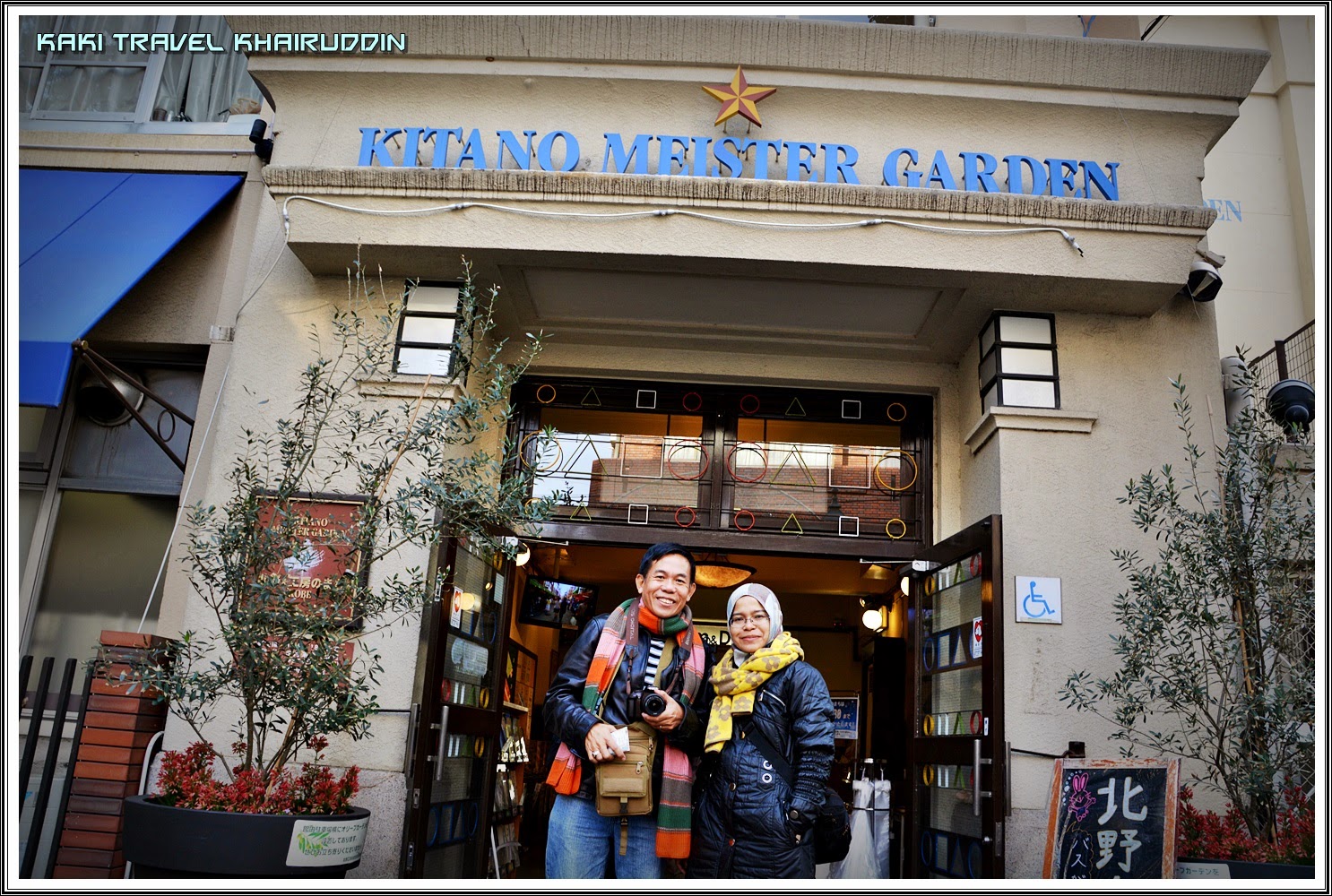
Selepas Himeji Castle, di sebelah petang kami terus ke bandar Sannomiya untuk melawat Kobe Muslim Mosque untuk solat taqdim. Kami juga telah melawat Kitano Meister Garden yang terletak tidak jauh dari Kobe Muslim Mosque. Kitano Meister Garden adalah tempat shopping mall. Dalam Mall itu, banyak kedai seperti menjual cendera mata, kedai roti, kedai makanan dan lain-lain.   

Kami naik train dari bandar Himeji ke Sannomiya menggunakan Kansai Wide  Pass. Pandu arah ke Kobe Muslim Mosque, senang je. Turun di station Sannomiya dan terus cari i information dalam stesyen itu sendiri. Pergi ke i information dan mereka akan bekal peta kawasan dan panduan ke tempat yang dikehendaki.    

Panduan JR Map dari Himeji ke Sannomiya

KITANO GROCERIES terletak bertentangan dengan Kobe Muslim Mosque

Kobe Muslim Mosque

Pandangan dalam Kobe Muslim Mosque

Bersama Zaleha Md Nassir dan Zainal Abideen Mohamed

Cinta bersama Zaleha Md Nasir

Bersama Cinta

Kitano Meister Garden

Nishimura's Coffee

Kobe Muslim Mosque Dome

Granpale

Granpale Condominium
Read more ...

Friday, 16 January 2015

Segmen Pencarian Bloglist Feb & Mac 2015

بِسْمِ اللَّهِ الرَّحْمَنِ الرَّحِيم 


Segmen ringkas untuk mencari 15 blog untuk disenaraikan dalam bloglist Truly Love. 

Syarat Penyertaan:

1. Follow blog Maria Firdz
2. Follow +Maria Firdz 
3. Buat entry bertajuk "Segmen Pencarian Bloglist Feb - Mac 2015"
4. Copy coding di bawah dan pastekan di ruang HTML new post.


5. Publishkan entry dan tinggalkan URL penyertaan di ruangan komen entry ini sahaja.

Segmen bermula 15 Januari 2015 hingga 30 Januari 2015.
Kesemua pemenang akan dipilih melalui random.org.

Jom sama-sama memeriahkan segmen ringkas ini.. 

Terima kasih atas sokongan semua... 

Happy blogging (^_^)

Read more ...

Thursday, 15 January 2015

Koniciwa 10 : Nishi-no-Maru (West Bailey)

Nishino-Maru Bailey

Entri ini masih tentang Himeji Castle. Kami telah memasuki salah satu bangunan yang terdapat di sekeliling Himeji Castle.

 Water Chestnut Gate

Water Chestnut Gate standing on a way from Sanno-maru bailey to Nino-maru bailey is the biggest gate in the castle. It gets its name from the wooden carved crest on an upper beam of the gate. Kato-mado, bell shaped decorations, usually found in Zen Buddhism, enhance the gate's beauty. (Himeji Convention & Visitors Bureau)

Hyakken-roka, Long Corridor in Nishino-maru Bailey

Hyakken-roka (corridor) is a three hundred meter long building around the lord's mansion located in Nishino-maru bailey. Along the corridor were the maid's rooms who served Princess Sen or Sen Hime. Sen Hime is said to have worshiped Otokoyama Tenmangu shrine from the corridor. (Himeji Convention & Visitors Bureau)  

Himeji Castle dari pandangan salah satu tingkap di  West Bailey

Zoom dekat Himeji Castle

Lihat begitu cantik seni bina Himeji Castle  

Pokok-pokok yang tinggal kayu adalah pokok Cherry Blossom yang berbunga hanya pada musim bunga.
  
Pokok-pokok Japanese Maple hidup pada musim luruh sahaja. Sekarang baru permulaan musim sejuk.

Bandar Himeji 

Best kan menjadi orang Jepun Islam

The West Bailey

Nisho-no-Maru (West Bailey) was developed in 1618 to reinforce the area against the attack by the intruders

With Cinta
Read more ...

Wednesday, 14 January 2015

Koniciwa 9 ; Himeji Castle

A World Culture Heritage Site and a National Treasure of Japan

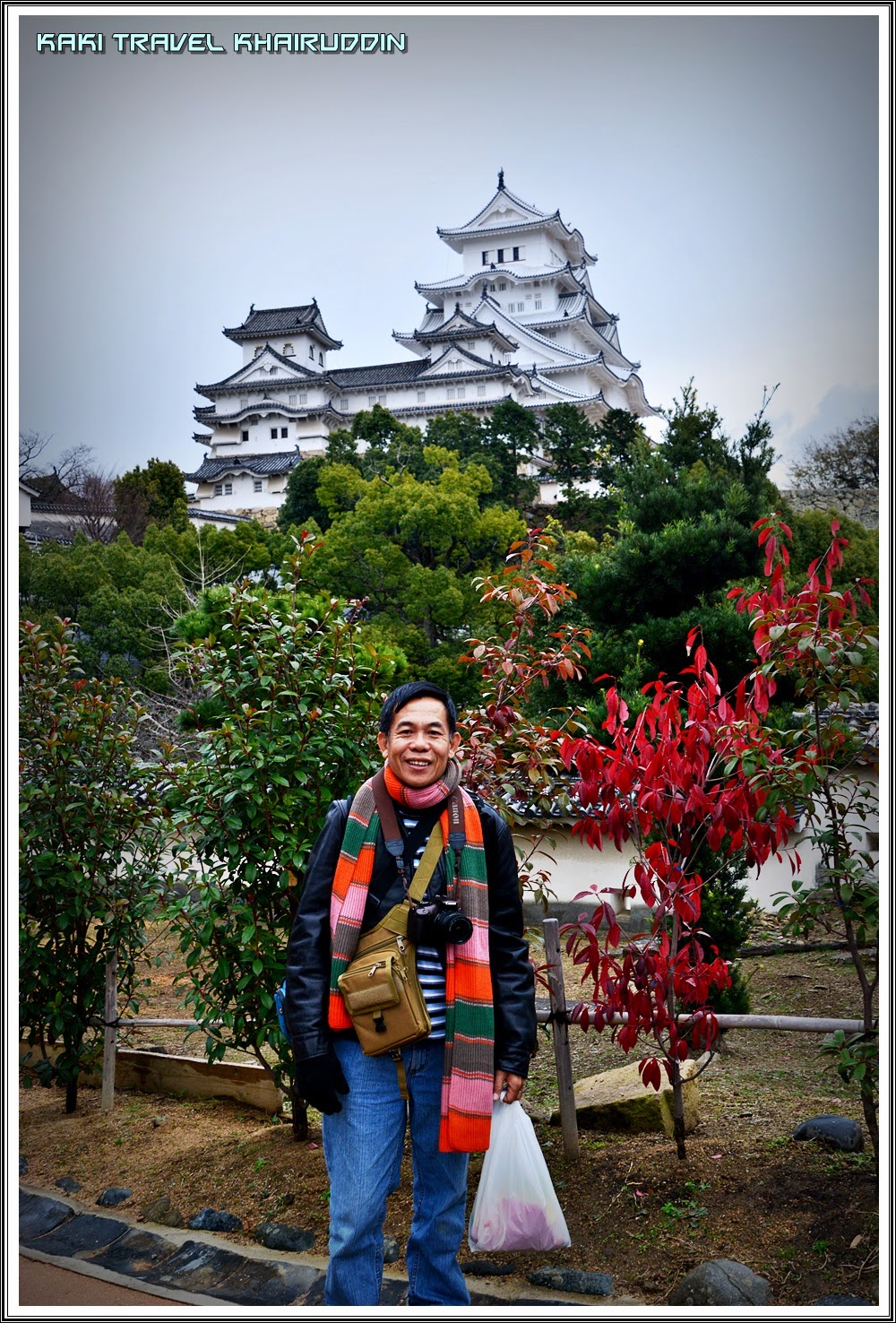
Himeji Castle built in the early 17th century, represents the highest achievement in Japanese castle architecture. Designated as a national treasure in 1931, the castle was registered as the World Cultural Heritage in 1993 as the first cultural site in Japan. The registration occurred because the castle has kept its original design at the time of construction, such as turrets, stone walls, gates, and moats, which still survive today. The main castle keep (Dai-ten-Shu) connected with three small keeps (Ko-tenshu) linked by passage turrets (Watari yagura) remains perfectly in their original forms. Because of its elegant appearance totally covered with white plaster, the castle has been compared to a white bird flying off to the sky. Its famous nickname is White Heron castle. Take enough time to tour around the castle. (Himeji Convention & Visitors Bureau)

Transportation : 15 min. walk from the north side of the Hemiji Station.

Admission Fee : Free during our visit there. Otherwise, 400 yen (Adult )and Children 100 yen (Apr. 12, 2010 - end of March 2015). After 2015 March 27, 1,000 yen (Adult) and Children 300 yen.

View from the north side of the Himeji Station

 Path way to Himeji Castle

 Main entrance of Himeji Castle

 Spectacular view of Bonsai Garden around the castle

Take enough time to tour around the castle

 Castle cannot be entered until March 2015 because is under construction.

 Its famous nickname is White Heron Castle

 Appearance totally covered with white plaster, the castle has been compared to  white bird flying off to the sky.

 With Cinta

 The castle's beauty and level of perfection are the greatest of any wooden structure in Japan.

 Many structures such as keeps, towers, walls and moat have been well preserved for over 400 years.

The site is famous for showing the unique defensive methods of Japan's feudal era

Read more ...